
A new CoEHAR systematic review and meta-analysis, published in Internal and Emergency Medicine, has examined the available evidence on the relationship between electronic cigarette use and metabolic health outcomes, including prediabetes, diabetes, and insulin resistance.
The study, led by an international team of researchers from Europe, Asia, Australia, and the Middle East, reviewed and synthesized the current scientific literature to better understand whether e-cigarette use may influence the risk of metabolic disorders.
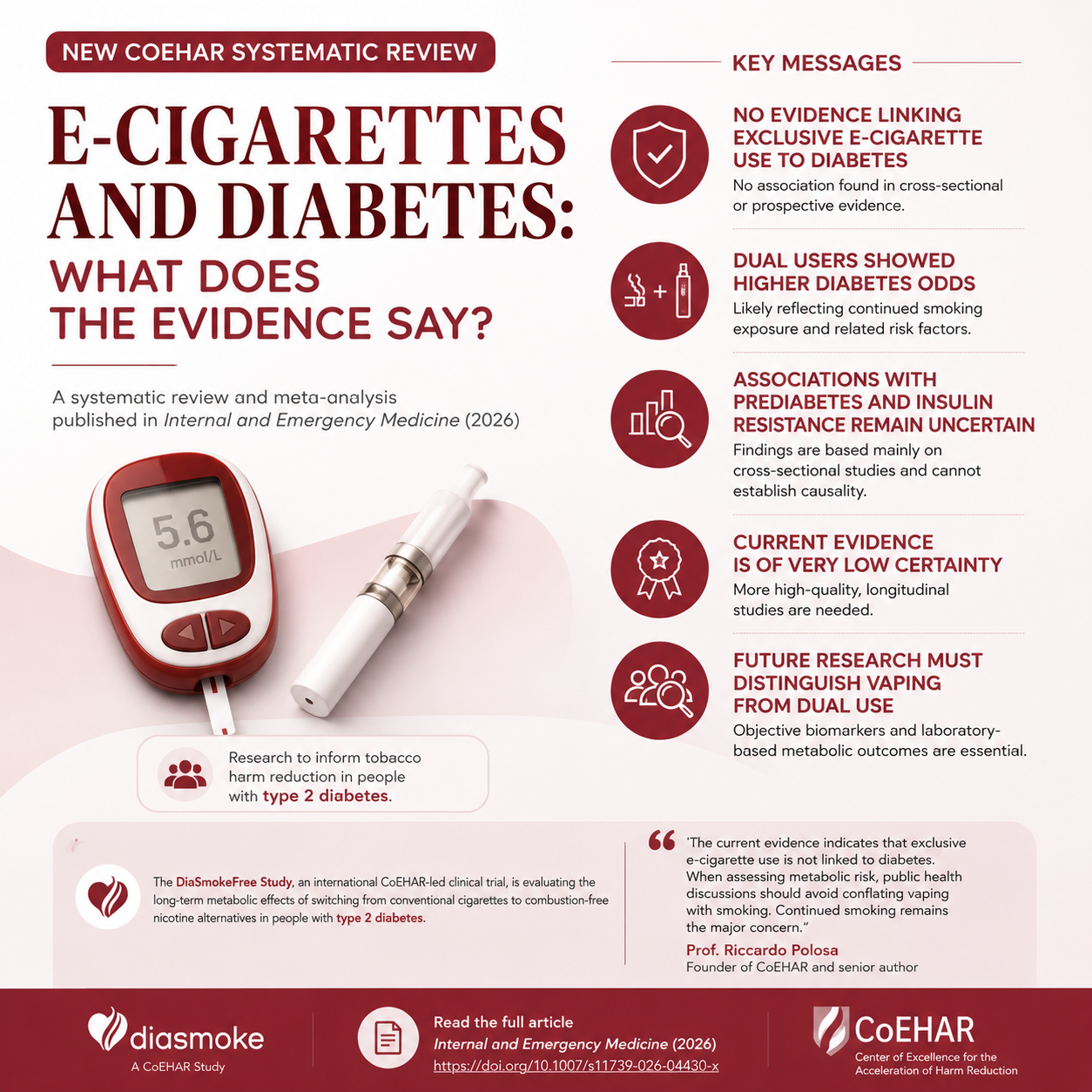
No Association Between Exclusive E-Cigarette Use and Diabetes
The review found no evidence that exclusive e-cigarette use is associated with diabetes, either in cross-sectional studies or in the only prospective cohort study currently available.
By contrast, individuals who both smoked cigarettes and used e-cigarettes—commonly referred to as dual users—showed a modest association with diabetes. According to the authors, this finding is likely explained by continued exposure to combustible cigarette smoke and other smoking-related behavioral and health risk factors. The results highlight the importance of distinguishing between exclusive e-cigarette users and dual users when evaluating potential health effects.
Prediabetes and Insulin Resistance: Evidence Remains Uncertain
Researchers also identified associations between e-cigarette use and increased odds of prediabetes and insulin resistance in some cross-sectional studies. However, the certainty of this evidence was rated as very low. Most of the available studies relied on self-reported vaping status, used cross-sectional designs, and were unable to determine whether e-cigarette use preceded the observed metabolic changes. As a result, the findings cannot establish causality.
The authors emphasize that associations observed in cross-sectional research should be interpreted cautiously, particularly when studying complex metabolic conditions influenced by multiple lifestyle, behavioral, and environmental factors.
Why Separating Vaping From Smoking Matters
A central message emerging from the review is that combining exclusive e-cigarette users with dual users may lead to misleading conclusions. While cigarette smoking is a well-established risk factor for type 2 diabetes and metabolic dysfunction, the independent metabolic effects of e-cigarette use remain uncertain. Failing to distinguish between different patterns of nicotine use can obscure important differences in risk profiles and complicate public health assessments.
The authors argue that future research should consistently separate exclusive vaping from dual use and incorporate objective measures of product use rather than relying solely on self-reported information.
The Need for Better Evidence
The review highlights significant gaps in the current literature and calls for large prospective studies with longer follow-up periods, standardized laboratory-based metabolic outcomes, and objective biomarkers of exposure. Such research will be essential to clarify whether switching from combustible cigarettes to smoke-free nicotine alternatives has any long-term impact on metabolic health.
Among the ongoing initiatives addressing these evidence gaps is the DiaSmokeFree Study, an international CoEHAR-led clinical trial specifically designed to evaluate the long-term metabolic effects of switching from conventional cigarettes to combustion-free nicotine alternatives in people with type 2 diabetes. By monitoring glycaemic control, cardiovascular risk factors, and other metabolic outcomes over time, DiaSmokeFree aims to generate high-quality prospective evidence capable of clarifying whether moving away from combustible tobacco can influence the progression of diabetes and related complications. The study represents one of the first large-scale efforts to investigate tobacco harm reduction within a diabetic population and directly addresses several of the research priorities identified by the present review.
“The current evidence indicates that exclusive e-cigarette use is not linked to diabetes,” said Prof. Riccardo Polosa, Founder of CoEHAR and author of the study. “When assessing metabolic risk, public health discussions should avoid conflating vaping with smoking. Continued smoking remains the major concern.”
Reference
Adebisi YA, Campagna D, Ceriello A, Alhur AA, Alshahrani NZ, Misra A, Basit A, Russo C, Battelino T, Somasundaram N, Jalaludin MY, Saisho Y, Walicka M, Tomaselli V, Magliano DJ, Moser O, Mitri J, Chen R, Polosa R. Association between electronic cigarette use and prediabetes, diabetes, and insulin resistance: a systematic review and meta-analysis. Internal and Emergency Medicine (2026).
https://doi.org/10.1007/s11739-026-04430-x